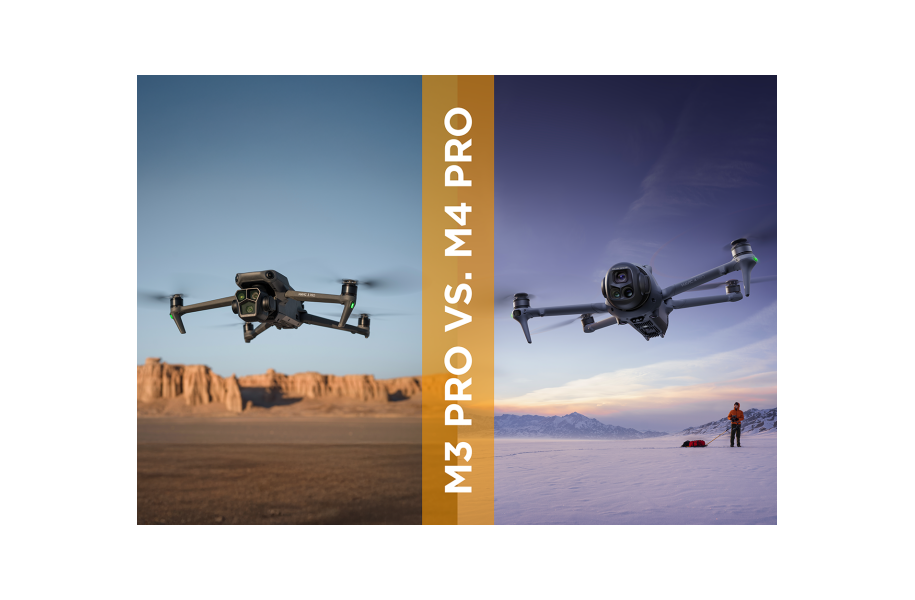
Mavic 4 Pro vs. Mavic 3 Pro – The Upgrade at a Glance
In this article, you will learn:
1. Where the image quality truly improves (100 MP main camera, new telephoto optics, 6K).
2. How flight time, batteries, and charging performance affect operations (51 min., 6654 mAh, 240 W).
3. What role LiDAR and night detection play for safe flights in difficult environments.
4. Why the new RC Pro 2 with a rotatable 7″ display noticeably improves the workflow.
Camera & Image Quality: More Resolution, More Precise Composition
Both models rely on a Hasselblad 4/3″ CMOS optic, but the Mavic 4 Pro clearly pulls ahead with 100 megapixels (previously 20 MP). The slightly reduced field of view from 84° to 72° supports even more precise image composition. The telephoto unit has also been greatly upgraded: Instead of 1/2″ and 12 MP, the 4 Pro now uses a 1/1.5″ sensor with 50 MP – ideal for crisp zoom details without strong artifacts.
For video recordings, the 4 Pro increases the resolution to 6K at 60 fps (compared to 5.1K/50 fps). In practice, the new camera system pays off primarily through more reserves in post-processing: finer textures, cleaner zooms, and noticeably higher dynamic range.
Flight Time & Energy: Longer Missions, Quicker Back in the Air
The 51 minutes of flight time of the Mavic 4 Pro means +8 minutes compared to its predecessor – made possible by the larger 6654 mAh battery (previously 5000 mAh). The new 240 W power supply fully charges one battery in about 51 minutes. For professional crews with multiple batteries, this significantly reduces ground time and increases operational density.

Safety & Sensor Technology: LiDAR Brings Visibility in the Dark
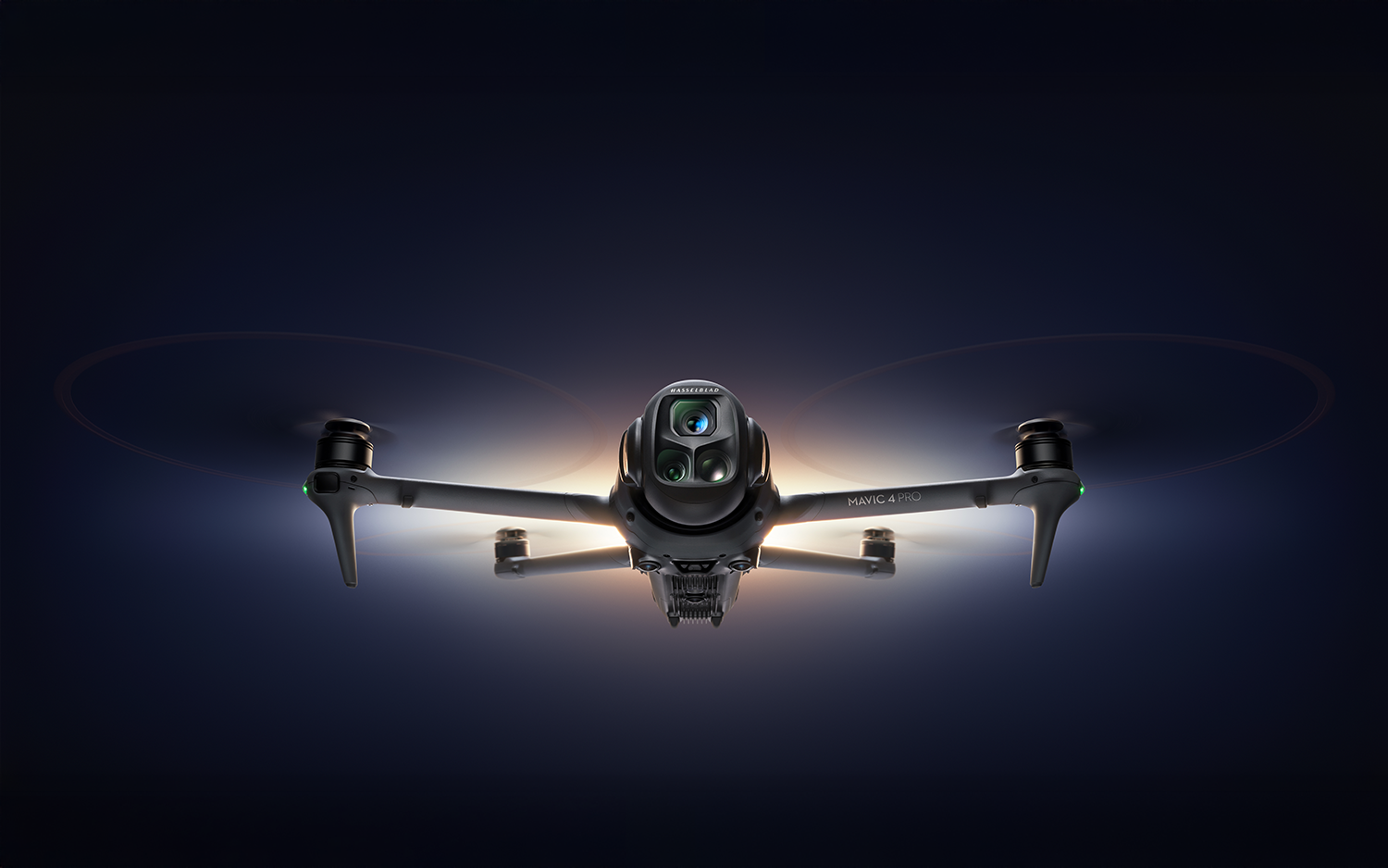
The Mavic 4 Pro extends environmental detection with LiDAR and detects obstacles from as low as >0.1 LUX. The Mavic 3 Pro relies on visual and infrared sensors here and requires at least 15 LUX. For night flights, interiors, or dark environments, this is a tangible gain in safety and mission suitability.
Operation & Workflow: Rotatable 7″ Display Makes the Difference
The new RC Pro 2 with a rotatable 7″ display simplifies image composition – especially for portrait format – and ensures intuitive control. Together with the camera upgrades, this results in a noticeably smoother workflow from setup to export.
Conclusion: A Clear Professional Upgrade
More resolution, better telephoto performance, longer flight time, LiDAR for difficult lighting conditions, and a well-thought-out remote controller – the Mavic 4 Pro improves in almost all core areas. For users who prioritize image quality, safety, and operational duration, it is currently the more consistent choice.
| Feature | DJI Mavic 4 Pro | DJI Mavic 3 Pro |
|---|---|---|
| Main Camera MP | 100 MP (Hasselblad 4/3″ CMOS) | 20 MP (Hasselblad 4/3″ CMOS) |
| Field of View | 72° | 84° |
| Telephoto Sensor/MP | 1/1.5″ / 50 MP | 1/2″ / 12 MP |
| Max. Video Resolution | 6K @ 60 fps | 5.1K @ 50 fps |
| Max. Flight Time | 51 minutes (+8 min) | 43 minutes |
| Battery Capacity | 6654 mAh | 5000 mAh |
| Charging Power | 240 W | (Not specified, implied lower) |
| Obstacle Detection (Low-Light) | LiDAR (>0.1 LUX) | Visual/IR (min. 15 LUX) |
| Remote Controller | RC Pro 2 (Rotatable 7″ Display) | RC Pro (Fixed Display) |
Are you interested in this topic? Check it out!