
The selection question
The right configuration starts with the operational profile
FIXED PROTECTED AREA
Recurring risk at the same site
Critical infrastructure, production sites, logistics centres, data centres, stadiums or club grounds require continuous monitoring. Power, network connectivity and defined alert processes can be provided permanently.
CHANGING PROTECTED AREA
Time-limited deployment at different locations
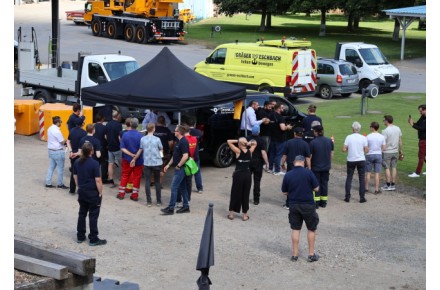
Events, construction sites, demonstration deployments or temporarily sensitive projects require rapid availability and straightforward relocation.
The most common mistake: A configuration is selected based on maximum range before the protected area, radio environment and deployment duration have been assessed.
FIXED SITE
Continuous monitoring with permanent power, network connectivity and defined alert processes.
CHANGING DEPLOYMENT
Temporary protection with rapid deployment and flexible relocation.
The largest figure is not what matters. The decisive factor is whether the configuration matches the actual security requirement.
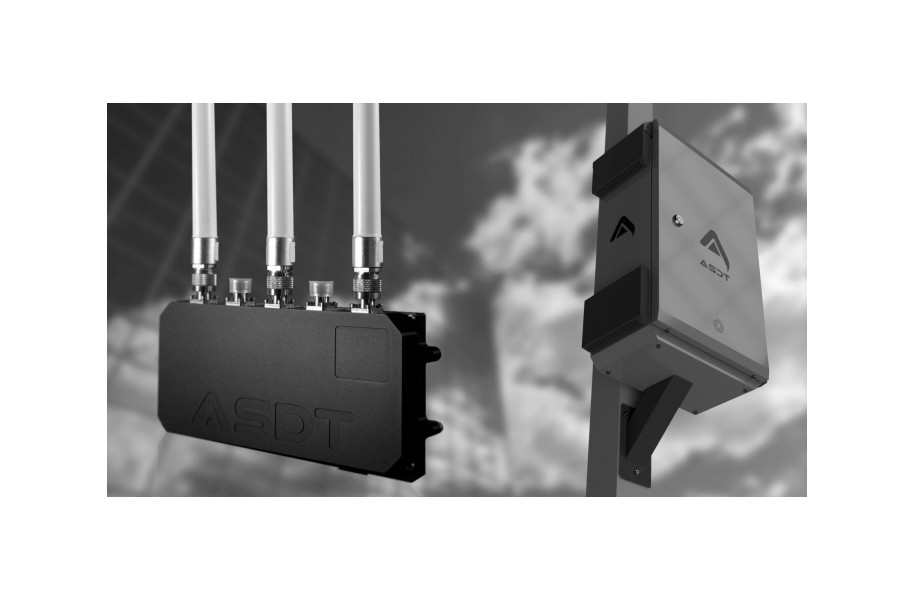
ASDT SENDES Stationary
Stationary drone detection is designed for permanent protection

ASDT SENDES Mobile
Mobile drone detection brings the situational overview to the deployment site
The mobile SENDES configuration is housed in a weatherproof case. According to the product specification, it weighs 14 kilograms, offers a technical range of up to 5 kilometres and can operate for up to four hours on its integrated batteries without an external power source.
Connectivity is provided via 4G LTE or Ethernet. This makes the system suitable for events, changing project locations, temporarily sensitive areas and initial operational assessments.
Clear limitation: Without a stable network connection or external power supply, battery life and connectivity limit operation.

14 kilograms, a technical range of up to 5 kilometres and up to four hours of autonomous operation. Suitable for changing or time-limited security assignments.
Network coverage and power supply must match the planned deployment duration.
Direct comparison
Neither better nor worse. Designed for a different purpose.
Stationary
Fixed site, up to 10 km, permanent power supply and continuous operation.
Mobile
Changing deployment, up to 5 km, up to four hours of battery operation, 4G LTE or Ethernet.
All figures are technical maximum values. Actual performance is determined by the site and system configuration.
Before the proposal
Range alone does not determine effectiveness
01 TERRAIN
Buildings, differences in elevation and signal shadowing influence the suitable position.
02 RADIO ENVIRONMENT
Local radio activity and sources of interference can affect reception conditions.
03 OPERATION
Power, network connectivity, personnel and deployment duration must suit the chosen configuration.
04 PROCESS
Alert rules, responsibilities and documentation turn technology into a security concept.
Transparent advice: Installation, configuration, training and ongoing operation must be included in the commercial assessment. Purchasing the hardware alone does not answer these questions.
01 TERRAIN: Assess the mounting point and signal shadowing.
02 RADIO: Analyse local reception conditions.
03 OPERATION: Clarify power, network connectivity and deployment duration.
04 PROCESS: Define alert paths and responsibilities.
In brief
Frequently asked questions about stationary and mobile drone detection
Is the stationary system always more capable?
The stationary configuration offers a greater technical range and continuous operation. For changing locations, however, mobility may be more important.
Can the mobile system operate for longer than four hours?
Four hours refers to autonomous battery operation. A suitable external power supply must be planned for longer deployments.
Is a product specification sufficient for planning?
No. Range, installation and system selection must be assessed against the terrain, radio environment and security process.
Is the stationary system always more capable?
For continuous operation and greater technical range, yes. At changing locations, the mobile configuration may be more suitable.
Can the mobile system operate for longer than four hours?
Longer deployments can be planned with an external power supply. The four-hour figure applies to autonomous battery operation.
Why is a site assessment necessary?
Because the terrain, radio environment, infrastructure and alert processes determine actual performance.
ASDT SENDES for sensitive operational areas
Choosing between stationary and mobile is an operational decision.
Before preparing a proposal, ProFlyCenter assesses the site, protected area, radio environment, deployment duration and existing security processes.
Your direct contact
Which configuration suits your security requirements?
Carsten Weber clearly explains which configuration is appropriate and where technical or operational limitations apply.
ASDT SENDES for sensitive operational areas
Stationary or mobile?
We assess the deployment duration, site, radio environment and security process.
Discover ASDT SENDESView the stationary systemView the mobile systemCW
Your contact
Carsten Weber
Clear advice on the appropriate configuration and its limitations.
Book a free initial consultationAre you interested in this topic? Check it out!