In this article, you will learn:
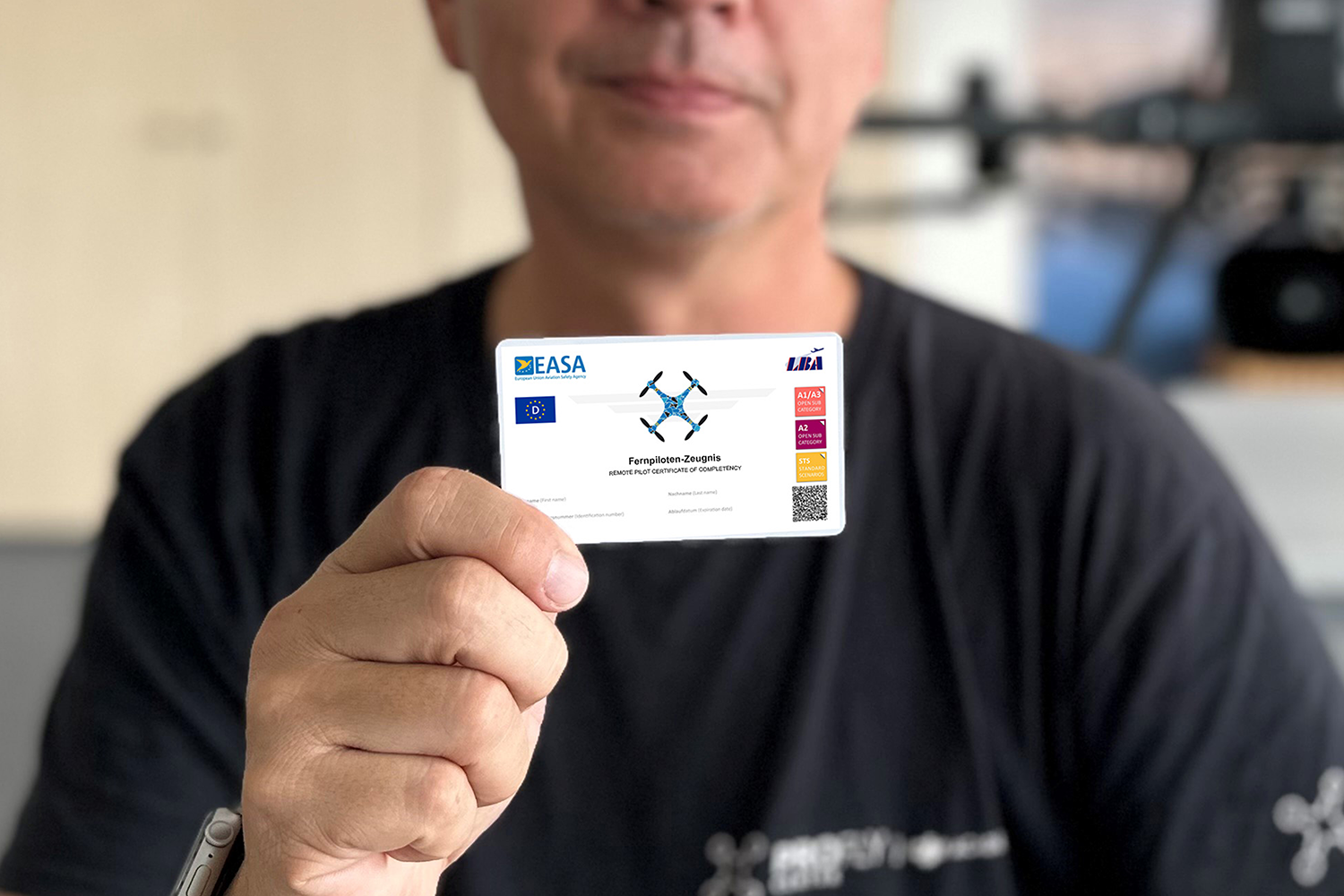
1. What the STS Remote Pilot License is and which scenarios (STS-01 / STS-02) it covers.
2. Why the STS training is worthwhile even without immediate STS flight (SORA, authorities, insurance, standards).
3. What applies to BOS operations – and why STS is still useful as a training standard.
4. Which alternatives & limits there are to STS and when a SORA authorization is necessary.
5. How you can structuredly implement your entry into the Specific Category with the Pro Fly Center.
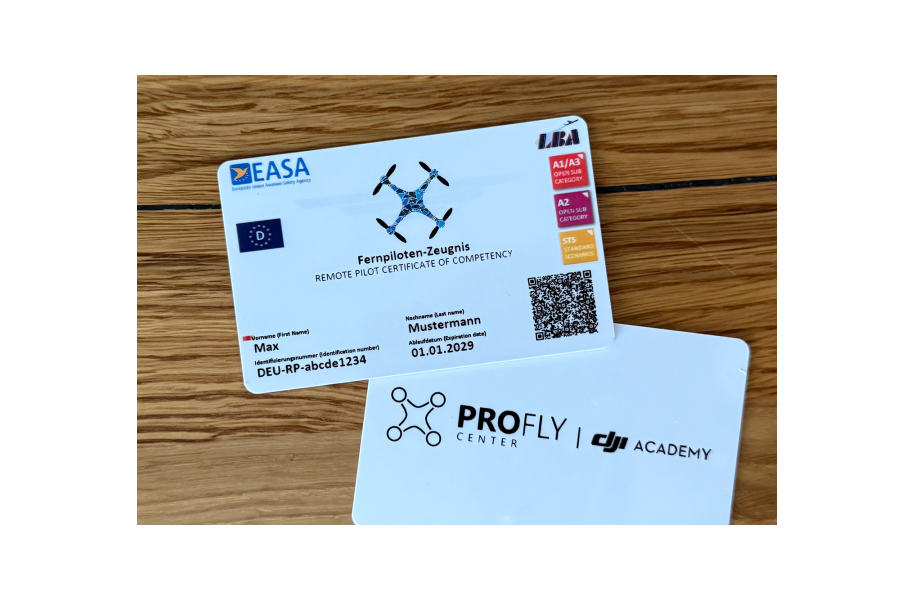
1. What is the STS Remote Pilot License?
The Standard Scenarios (STS) of the EU Drone Regulation simplify operations in the Specific Category because no individual risk analysis is required. In Germany, the following are currently permitted:
- STS-01: VLOS flights (UAS < 25 kg) over controlled ground areas – also near uninvolved persons.
- STS-02: BVLOS flights over sparsely populated areas with an additional observer – nationally applicable.
Both scenarios require theoretical and practical training as well as a conformity assessment of the UAS used.

2. Is STS worthwhile even without an STS Flight?
Yes. The STS training is an ideal entry point into the Specific Category – even if you are not (yet) operating STS-01/02. Many projects no longer fall into the Open Category, for example, due to shorter distances to people, higher takeoff masses (> 4 kg), urban, or BVLOS operations. In such cases, a SORA-based operating authorization becomes necessary – and this is where STS knowledge immediately pays off:
- Recognition by authorities & insurers: documented competence facilitates applications and reduces follow-up questions.
- Structure & Safety in daily operations: emergency procedures, role distribution, checklists, flight planning, airspace checking, logbook keeping, and operational documentation.
3. BOS: Not Mandatory – Still Useful
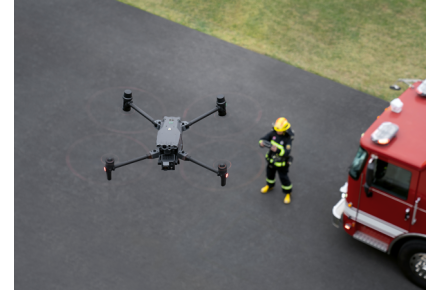
BOS (Fire Department, Police, THW, etc.) do not act according to EU drone law in sovereign tasks, but according to Art. 14 of EU Regulation 2019/947. An STS authorization or operating authorization is not required for this. Nevertheless, many units are establishing STS as a training standard:
- Uniform internal qualification & documented processes,
- Proof to the public and insurers,
- Common basis for operations with civilian service providers.

4. Alternatives & Limits
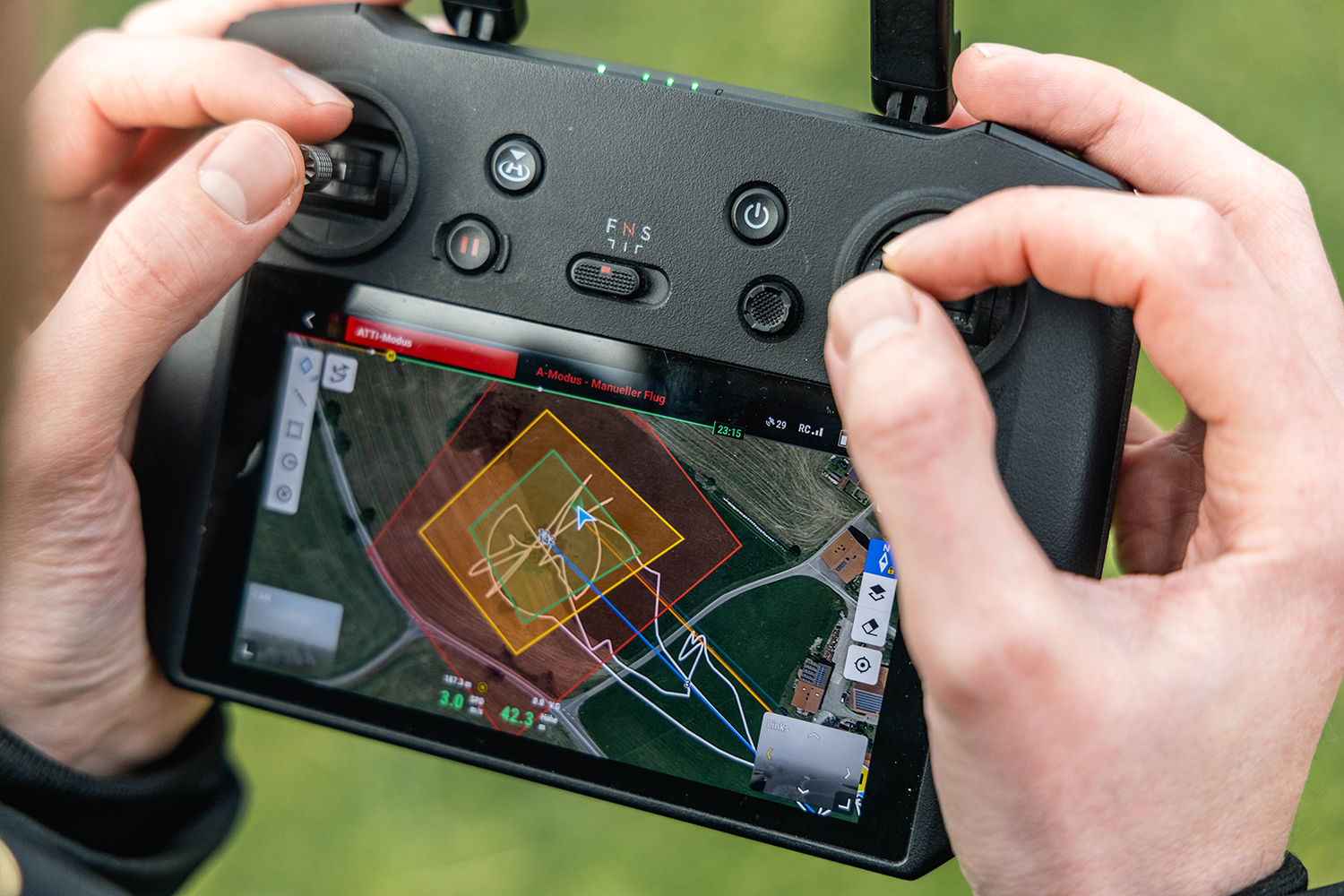
Not every operation fits into STS-01/02 – for example, with C3, C5, C6 drones, UAS > 4 kg, BVLOS without STS-02, or special near-to-people scenarios. In such cases, the path leads via a SORA with individual operating authorization. The STS training does not replace this, but it provides valuable methodology and structure for authorization, operation, and safety.
5. Conclusion & Your Path with the Pro Fly Center
Whether it's an STS scenario or a SORA authorization – the STS training is a door opener for professional drone operation: it strengthens your recognition by authorities, improves authorization chances, increases operational safety, and professionalizes your organization.
The Pro Fly Center GmbH supports you with STS-01 & STS-02 Remote Pilot Licenses, BOS-compliant training concepts, SORA workshops & application assistance, as well as online courses, in-person training, and in-house solutions. More about STS training can be found with us – book the appropriate training directly or get comprehensive advice.

Are you interested in this topic? Check it out!