What it is about
How drone flights can be made inclusive and safe – with practical recommendations for pilots in wheelchairs, deaf people, people with limited motor skills, and sensible assistance at the operational site.
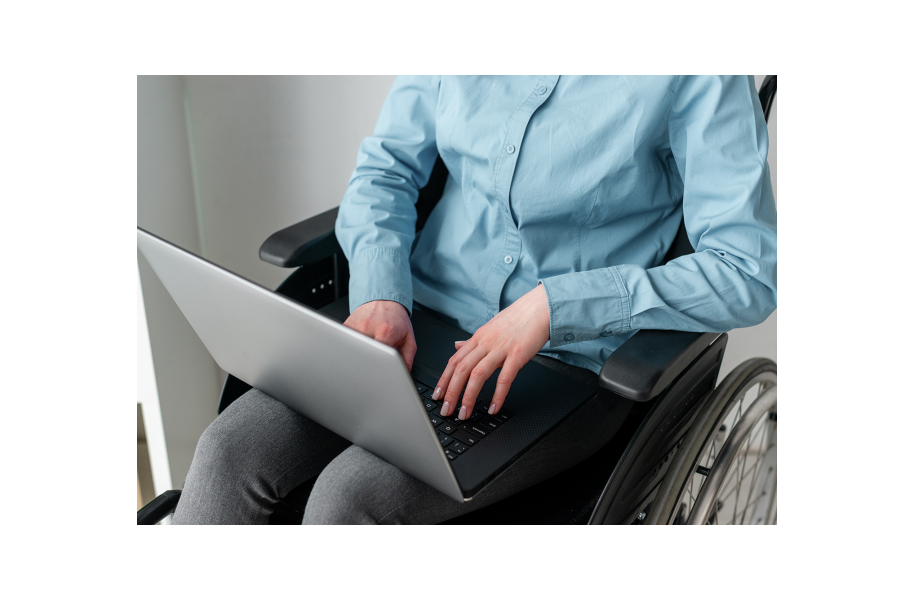
For People in Wheelchairs
The focus is on barrier-free areas, ergonomic operation, and clear procedures. This keeps the control safe and stress-free – from setup to landing.
- Barrier-free takeoff/landing sites: flat, accessible, free of obstacles.
- Automated takeoff/landing functions of the drone for reproducible procedures.
- Ergonomic, clearly visible controls on the remote controller.
- Assistance from trained persons (setup, checklists, securing the area).
- Training & simulations for routine building; safety zones and emergency protocols clearly marked.
For Deaf People
Information must arrive visually and haptically. Consistently supplement acoustic warnings with light, text, and vibration.
- Visual status signals: LED, screens, colored warnings in the app.
- Vibration/Light for critical warnings (battery status, RTH, link quality).
- Written instructions & checklists for briefing and operation.
- Sign language interpretation if necessary; apps with visual alerts.
- Training in visual signals and drones with strong visual feedback.
For People with Limited Motor Skills
Stability, grip comfort, and individually adapted controls reduce fatigue and increase precision.
- Tripod/holder solutions for the remote controller; ergonomic grips or mounts.
- Adjustable sticks/buttons and large, clearly visible buttons for fine motor skills.
- Ergonomic controllers with additional gripping aids/attachments for more control.
- Flexible cables/extensions for freedom of movement and comfortable posture.
Assistance at the Operational Site
An assistant can significantly relieve the operation without restricting independence.
- Stabilizing the remote controller, supporting fine-tuning/calibration.
- Observation & feedback on the flight image, warnings about risks/errors.
- Transport & setup of the equipment, ensuring visibility of the drone/controller.
- Communication & coordination during complex maneuvers or team operations.
Our Offer
As the Pro Fly Center, we actively support inclusive training. The goal is for pilots to be able to operate their UAS safely and without risk to uninvolved persons – regardless of the disability. In special cases, we also review requests to the LBA together with you. Contact us – we provide individual and practical advice.
Are you interested in this topic? Check it out!