C-UAS solutions for professional security concepts
Security starts with clear situational awareness.
ASDT SENDES detects unauthorized drone flights in real time, locates their source and provides your security team with a reliable operational picture before an incident causes damage.
The passive RF technology was developed by the Spanish manufacturer ASDT and is used by national security authorities, at airports and during major events. ProFlyCenter provides manufacturer-independent advice on the right configuration for your site.
Passive detection
RF-based, with no active emissions
Range of up to 10 km
Stationary or mobile
Individually planned
Site and protection objective analysis
No off-the-shelf solution
The system configuration is based on the site, operational profile and security process.
C-UAS solutions for professional security concepts
Security starts with clear situational awareness.
ASDT SENDES detects unauthorized drone flights in real time and provides your security team with a reliable operational picture.
Passive RF technology from the Spanish manufacturer ASDT, used by authorities, airports and major events. ProFlyCenter provides manufacturer-independent advice on the right configuration.

Recorded drone activity, Spain 2022
46,000+
Spanish ASDT SENDES systems recorded this number of drone operations in monitored airspace in a single year. It is an indicator of the actual scale of unauthorized flights over sensitive areas.
Proven in real-world use: ASDT systems protect airports, correctional facilities, nuclear power plants, LaLiga football stadiums and the Sagrada Família in Barcelona, among other sites.
Why this matters now
The airspace above your site is no longer a no-man’s-land.
Commercial drones are affordable, quiet and readily available. What began as a recreational device becomes a risk at sensitive sites: industrial espionage over company premises, disruption of air traffic, unauthorized recordings during events or the smuggling of objects into protected areas.
Security authorities and critical infrastructure operators are already responding. In Spain, C-UAS systems now operate 24/7 at airports and industrial facilities. They are no longer an exception, but a standard component of modern security concepts.
✈️ Airports & airspace Disruptions caused by unauthorized flights + View details
A single unauthorized drone sighting near a runway can restrict air traffic for hours, resulting in additional costs for airlines, operators and passengers. Passive RF detection identifies these flights before they enter critical airspace and provides air traffic control with a reliable operational picture instead of an assumption.
🏟️ Stadiums & major events Crowds as a sensitive protected area + View details
At events with high concentrations of people, the airspace above the crowd is often the least controlled area. Mobile detection units can be deployed at short notice and add a third dimension to conventional perimeter security without disrupting ongoing operations.
🏭 Companies & production Risk to trade secrets and processes + View details
Industrial sites with confidential production or prototype development are usually well protected at ground level, but the airspace above them often is not. A single unnoticed overflight can be enough to expose production processes or unreleased products. Continuous RF detection closes this security gap.
Why this matters now
The airspace above your site is no longer a no-man’s-land.
Commercial drones are affordable, quiet and readily available. At sensitive sites, they become a risk ranging from industrial espionage over company premises to disruption of air traffic.
Recorded drone activity, Spain 2022
46,000+
Spanish ASDT SENDES systems recorded this number of drone operations in monitored airspace in a single year.
✈️ Airports & airspace Disruptions caused by unauthorized flights + View details
A single unauthorized drone sighting near a runway can restrict air traffic for hours. Passive RF detection identifies such flights at an early stage and provides a reliable operational picture.
🏟️ Stadiums & major events Crowds as a sensitive protected area + View details
Mobile detection units can be deployed at short notice and add a third dimension to conventional perimeter security without disrupting operations.
🏭 Companies & production Risk to trade secrets and processes + View details
A single unnoticed overflight can expose production processes or unreleased products. Continuous RF detection closes this security gap.
From detection to decision
How a radio signal becomes an actionable operational picture.
01 Detection · 02 Classification · 03 Localization · 04 Assessment
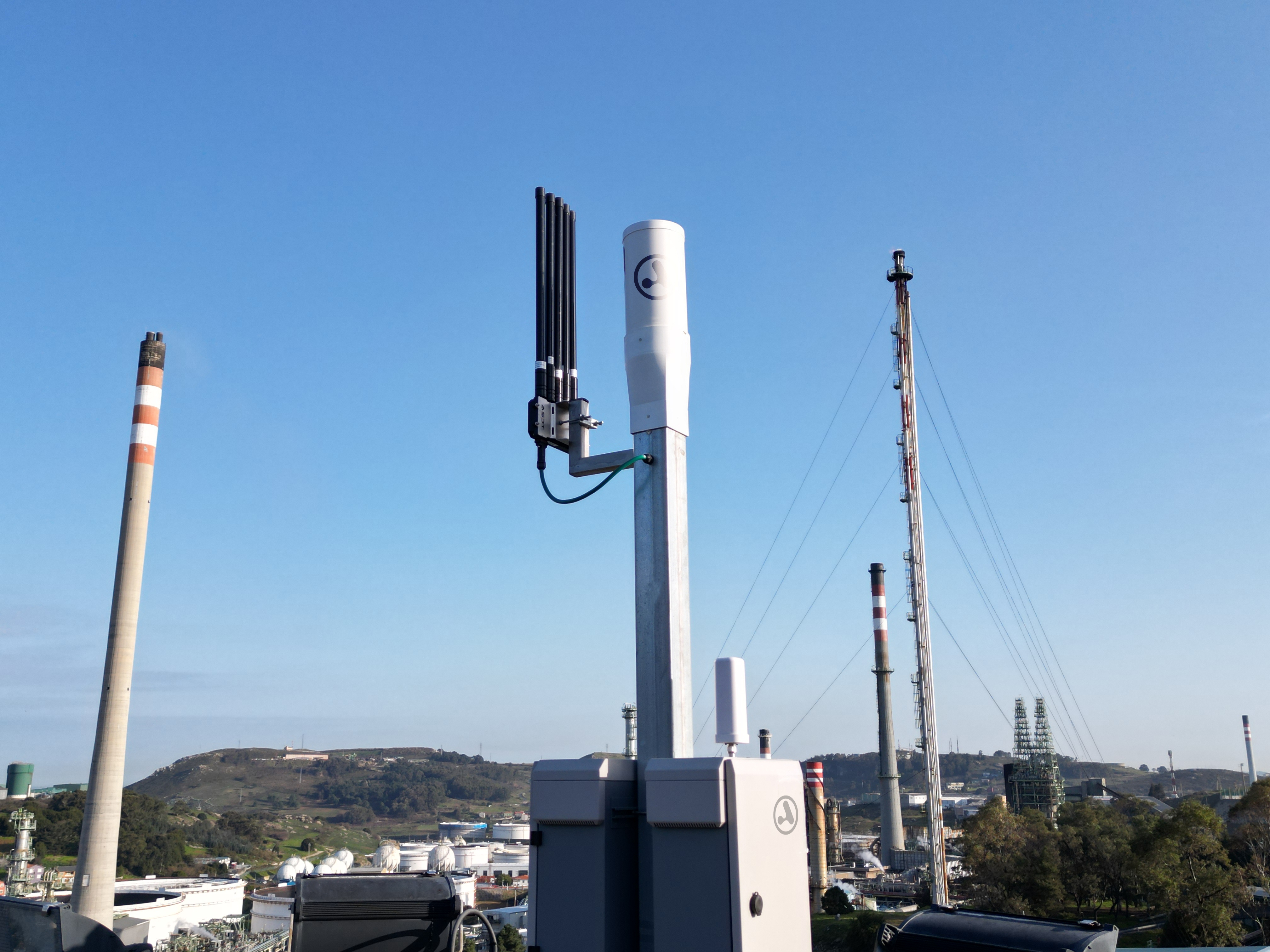
Step 01
Passively detect supported drone signals
The system analyzes the RF environment for known, supported communication patterns between the drone and its controller. In detection mode, the system does not transmit a signal of its own.
The first step is not counteraction, but early awareness of flight activity

Step 02
Classify the available signal information
Detected signal patterns can support the identification of the manufacturer and model. The scope and level of detail depend on the specific drone system and its transmission standard.
Technical classification supports the assessment, but does not replace an evaluation of the operational context

Step 03
Locate the position and flight path
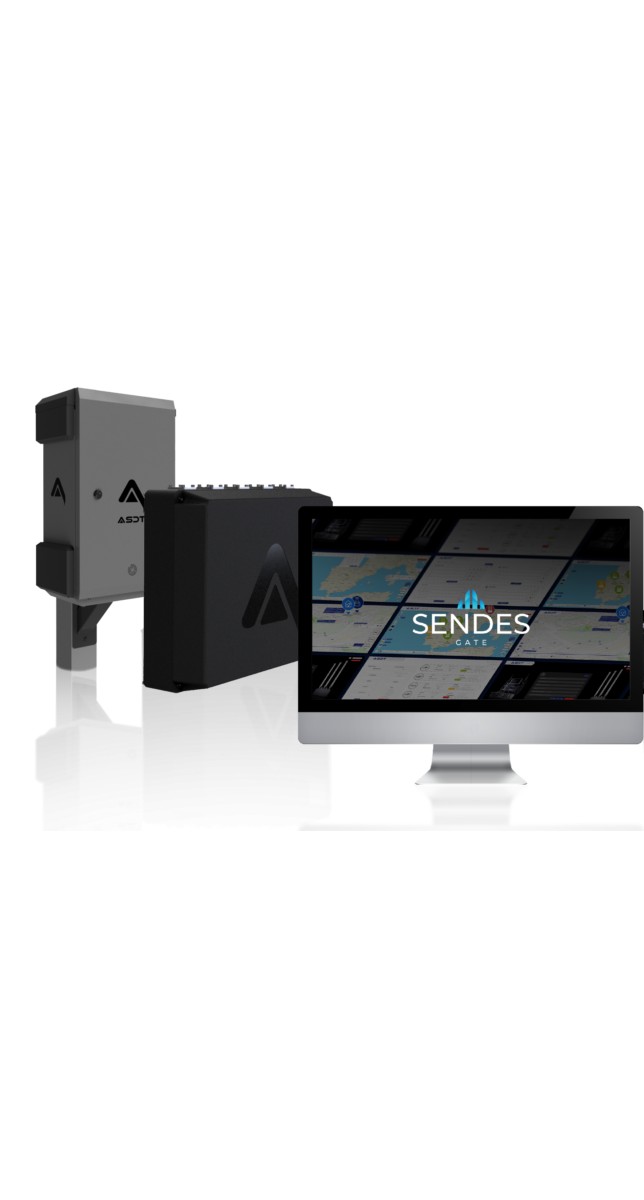
Detected activity appears live on the map in SENDES Gate, the central user interface for both system variants. Depending on the available signal data, the position, flight direction and takeoff point may be displayed.
The operational picture helps distinguish between an approach, an overflight and recurring activity

Step 04
Assess activity and respond
Warning zones, flight paths and event histories support your security team during the assessment. The stationary system variant can optionally be expanded with a neutralization module. The appropriate response is always defined by your security process.
The system provides the information required for assessment. The decision remains with you.
Transparent technical assessment
The information available depends on the drone model, transmission standard, site, RF environment and selected system configuration.
From detection to decision
How an actionable operational picture is created.
4 steps · → swipe sideways

Step 01
Passively detect signals
Known communication patterns between the drone and its controller are detected without transmitting a signal of its own.

Step 02
Classify information
Signal patterns support the identification of the manufacturer and model.

Step 03
Locate activity
The position and flight path are displayed live on the map.

Step 04
Assess and respond
The stationary variant can optionally be expanded with neutralization. The decision remains with you.
Transparent assessment
The information available depends on the drone model, signal standard, site and system configuration.
Two systems, one ecosystem
Stationary or mobile. A detailed comparison.
Both variants are based on the same SENDES technology and are integrated into the same user interface. The difference lies in their operational profile. Here are all the criteria in a direct comparison.
📡 Range
Stationary
10 km
Mobile
5 km
⏱️ Operating time
Stationary
24/7/365
Mobile
4 h autonomous
🧳 Mobility
Stationary
Fixed installation
Mobile
Case, 14 kg
🔧 Installation
Stationary
Freestanding, wall or mast
Mobile
4G/LTE or Ethernet, ready to use
🌦️ Ingress protection
Stationary
IP55
Mobile
IP65
🎯 Ideal for
Stationary
Permanent perimeter protection
Mobile
Events, temporary operations
For permanent protection
ASDT SENDES Stationary
Fixed 360° monitoring with a range of up to 10 km, continuous 24/7 operation and optional expansion with a neutralization module. The right choice for airports, industrial sites and permanently protected locations.
+ Detailed technical specifications
Detection radius: up to 10 km, 360°
Operation: 24/7/365, weather resistant
Ingress protection: IP55
Installation: freestanding, wall, ceiling or mast mounted
For flexible operations
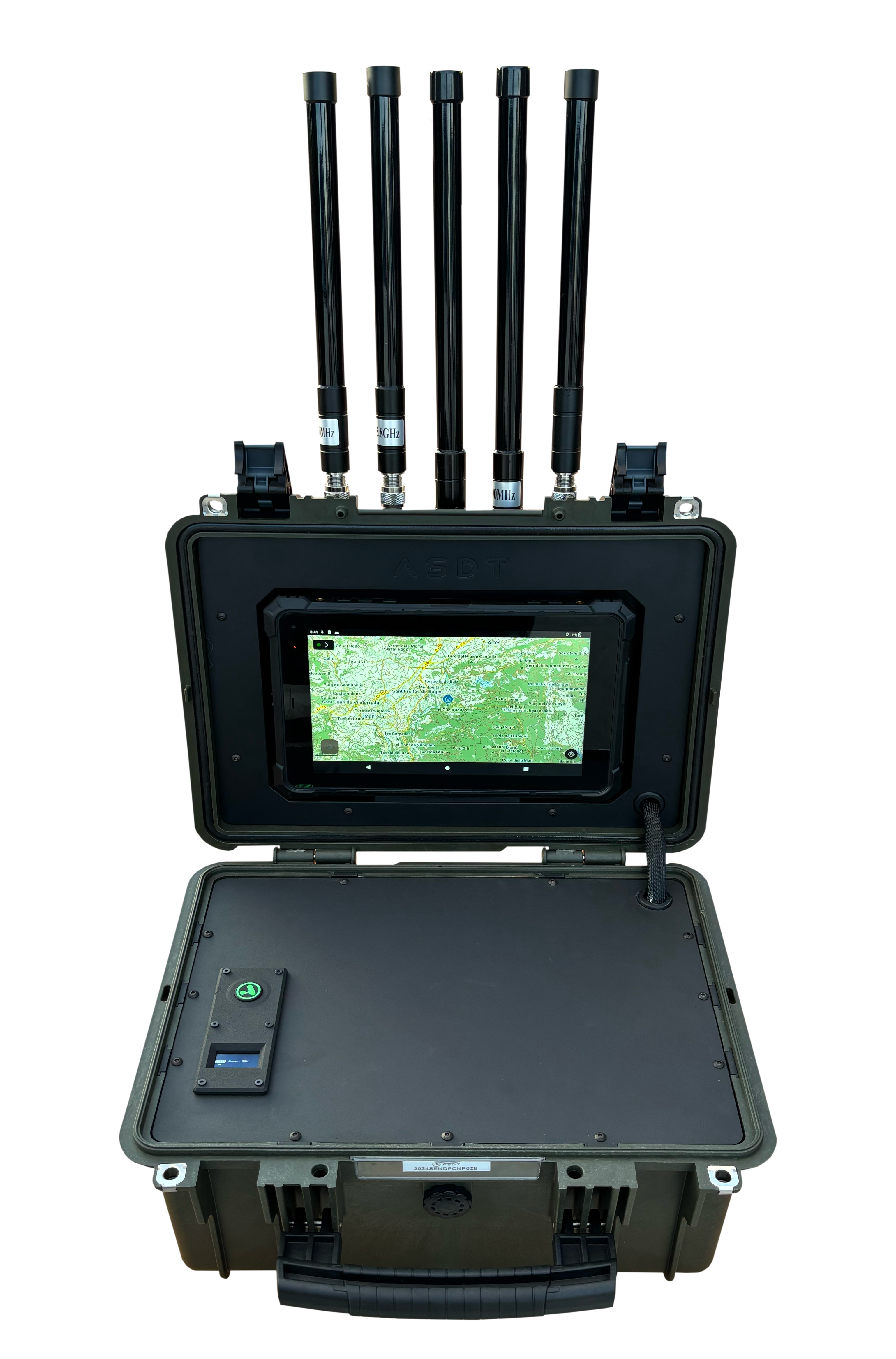
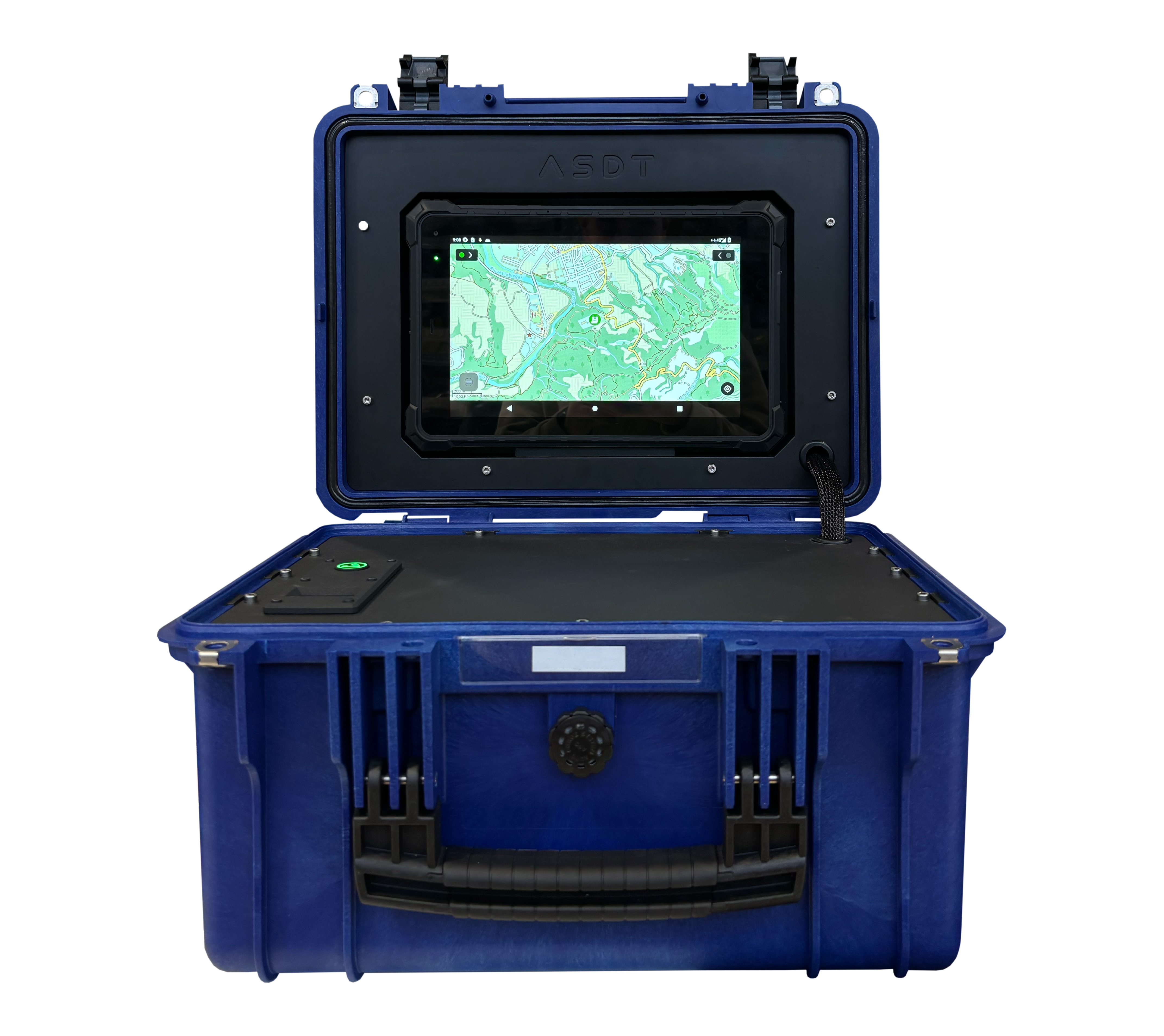
ASDT SENDES Mobile
360° detection with a range of up to 5 km in a compact 14 kg case and up to four hours of autonomous operation. The right choice for major events, temporary protection zones and sites without a fixed installation.
+ Detailed technical specifications
Detection radius: up to 5 km, 360°
Operation: up to 4 hours autonomously using integrated batteries
Ingress protection: IP65
Connection: 4G/LTE or Ethernet, compact case
Two systems, one ecosystem
Stationary or mobile. A detailed comparison.
→ swipe sideways
📡 Range
Stationary
10 km
Mobile
5 km
⏱️ Operating time
Stationary
24/7/365
Mobile
4 hours
🌦️ Ingress protection
Stationary
IP55
Mobile
IP65
🎯 Ideal for
Stationary
Perimeter protection
Mobile
Events, mobile use
For permanent protection
ASDT SENDES Stationary
Fixed 360° monitoring with a range of up to 10 km, continuous 24/7 operation and optional neutralization module.
View productFor flexible operations
ASDT SENDES Mobile
360° detection with a range of up to 5 km in a 14 kg case and up to four hours of autonomous operation.
View productExperience from real-world business environments
Proven technology. Directly from ProFlyCenter.
10+ years
Technology development
Development of the first SENDES prototype began in 2015.
LaLiga
Use in football stadiums
Documented SENDES deployments during match operations.
24/7
Continuous industrial operation
Documented use in a petrochemical complex.
2
ISO certifications
ISO 9001 and ISO 14001 according to the technology manufacturer.
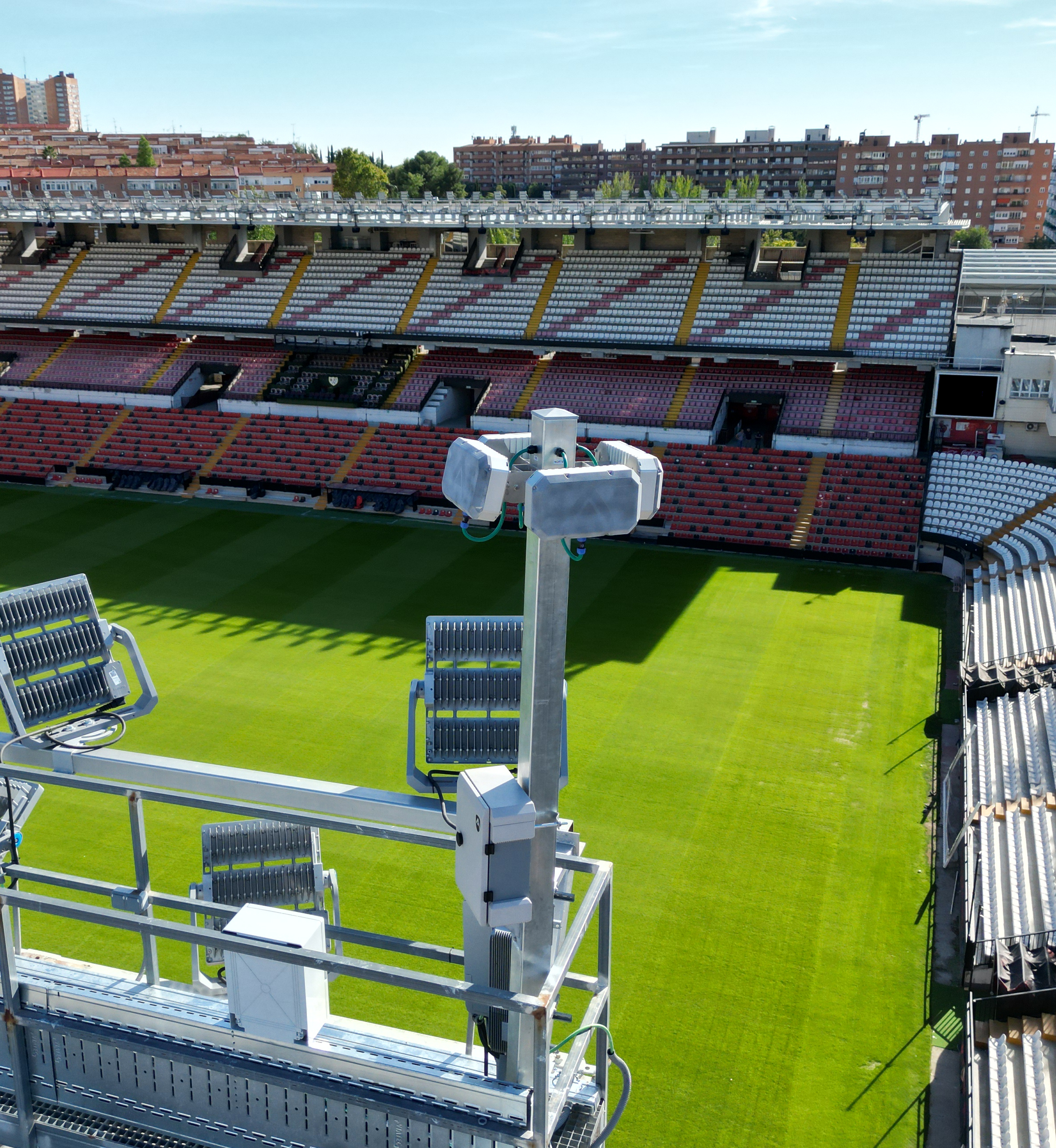
Documented stadium deployment
SENDES technology protects match operations at LaLiga stadiums.
During selected matches, SENDES technology is used to monitor and control the airspace. Regular stadium operations, including communication and broadcast technology, should remain as unaffected as possible.
Live operation
Deployment during ongoing events
Modular
Stationary and portable components
Continuity
Protection without unnecessary disruption
Transparent assessment: This reference documents the use of the SENDES ecosystem. ProFlyCenter assesses individually which configuration is suitable for a specific stadium or event venue.
Industry and manufacturing
24/7 protection in a petrochemical complex
ASDT documents a stationary SENDES installation in a large petrochemical complex. The system monitors perimeters, tank facilities and sensitive operational areas, among other zones.
A relevant example for production sites, energy facilities and companies with sensitive development areas.
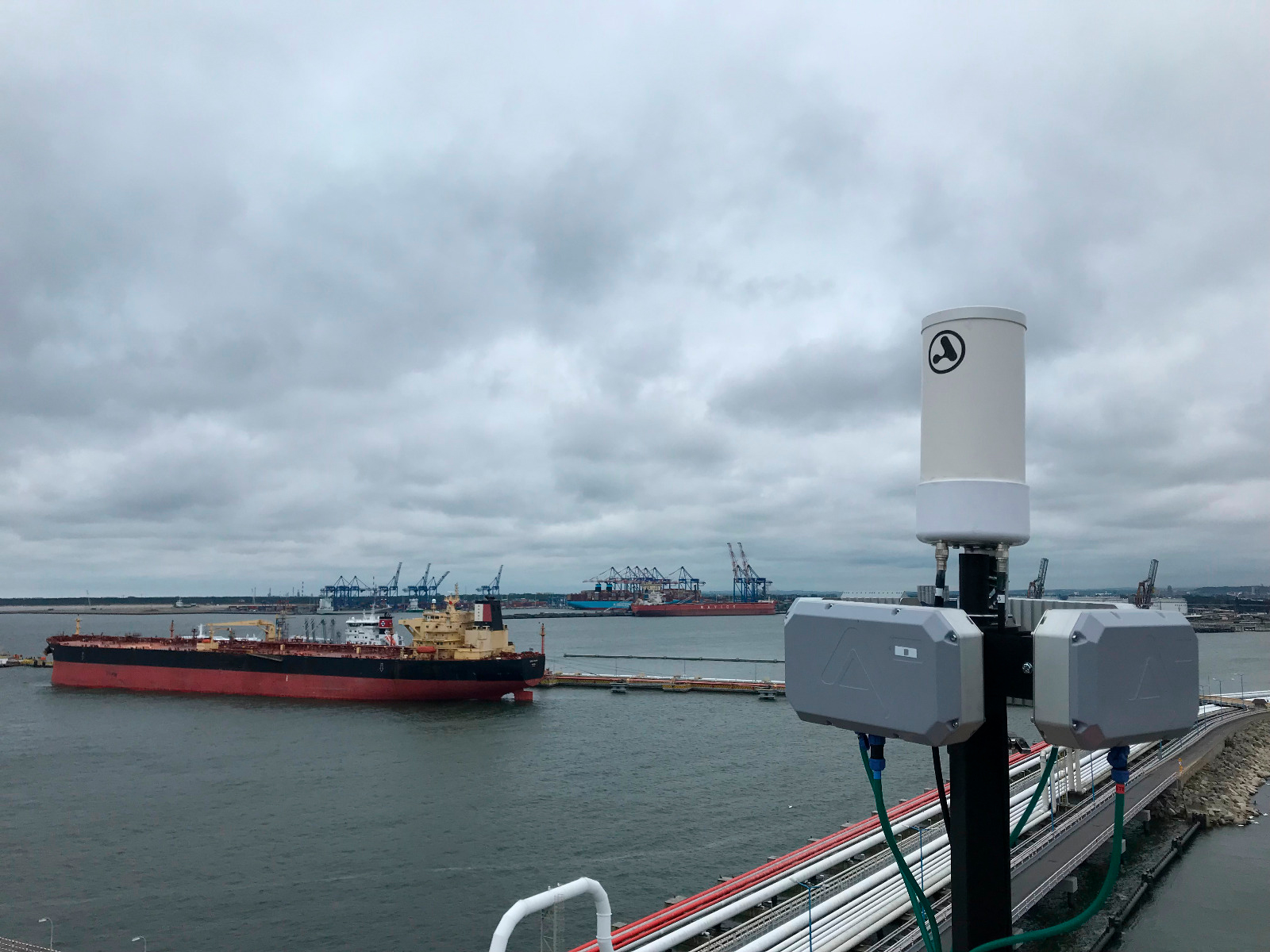
Ports and logistics
Airspace monitoring without interrupting operations
For port areas, ASDT describes continuous monitoring of quays, loading zones and access routes. The modular architecture can be integrated into existing security processes.
Relevant for logistics centers, commercial sites, ports and large cargo handling areas.
What we clarify openly before preparing a quote
The right system starts with the right expectations.
These limitations do not count against SENDES. They determine whether the system can be used effectively at your site.
01 Range
Terrain, buildings, the RF environment and the mounting position affect the actual range.
02 RF protocols
Not every autonomous, modified or unknown aircraft transmits a supported signal.
03 Detection
Passive detection provides an operational picture. It does not automatically neutralize an aircraft.
04 Configuration
A stadium, an industrial site and a logistics center require different security concepts.
Our promise: If the site, RF environment or risk profile speaks against the selected solution, ProFlyCenter will tell you before you buy.
Your provider in Germany
You purchase the system directly from ProFlyCenter.
ASDT is the technology manufacturer. ProFlyCenter handles consulting, quotations and sales for private-sector customers. This gives you a direct contact for your project.
Your direct benefits
✓ Consulting from ProFlyCenter
✓ Quotation from ProFlyCenter
✓ Purchase directly from ProFlyCenter
✓ Personal contact
CW
Your direct contact
Carsten Weber
Together, we determine which SENDES variant and configuration is right for your company.
Experience from business environments
Proven technology. Directly from ProFlyCenter.
→ swipe through references
10+ years
Development
SENDES technology since 2015.
LaLiga
Stadium deployments
Use during match operations.
24/7
Industrial use
Continuous monitoring.
2
ISO certifications
ISO 9001 and ISO 14001.

Documented stadium deployment
SENDES during live match operations
SENDES technology is used to monitor the airspace during selected LaLiga matches.
ProFlyCenter individually assesses which configuration is suitable for your stadium or event venue.
Industry and manufacturing
24/7 protection in petrochemical facilities
Documented stationary use for monitoring perimeters, tank facilities and sensitive operational areas.
Ports and logistics
Protection for ongoing operations
Continuous monitoring of loading zones, access routes and large logistics areas.
What we clarify openly
Not every configuration is suitable for every site.
01 Range: Terrain, buildings and the RF environment affect the actual range.
02 Signals: Not every autonomous or modified aircraft uses a supported protocol.
03 Response: Passive detection does not provide automatic neutralization.
04 Planning: Stadiums, industrial sites and logistics centers require different concepts.
If SENDES is not suitable for your site, ProFlyCenter will tell you before you buy.
Your provider in Germany
You purchase directly from ProFlyCenter.
We handle consulting, quotations and sales for private-sector customers.
✓ Direct consulting
✓ Quotation from ProFlyCenter
✓ Purchase from ProFlyCenter
CW
Your contact
Carsten Weber
Together, we determine which SENDES variant is right for your company.
Book a free initial consultation