Thermal Image Analysis – Basics & Practice (Summary)

In this article, you will learn:
1. What thermal images show and how to read the color scale/legend.
2. The analysis process: Object → Temperature distribution/anomalies → Interpretation in context.
3. Suitable color scales and typical temperature ranges (Tint, IronHot, Medical).
4. Practical tips: Consider ambient temperature & compare results with other data.
The Basic Principles
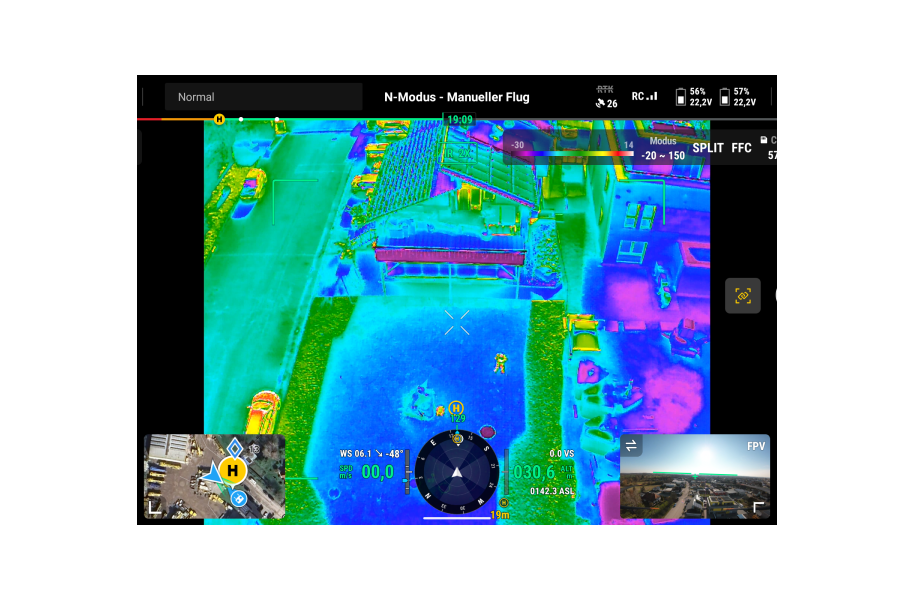
Thermal images visualize the temperature distribution: warm areas are bright (e.g., white/yellow), cold areas are dark (blue/black). Color scale and legend are crucial for correctly interpreting differences.


How to Analyze a Thermal Image
1) Identify the object (building, machine, person, etc.).
2) Check temperature distribution – where are the warmest/coldest zones, are there anomalies?
3) Interpretation in context: indications of damage, overheating, energy losses, or other problems.


Recommended Color Scales
Tint: universal, good contrast; typical range −20 °C to +150 °C.
IronHot: for machines/equipment, clearly highlights differences; typical 0 °C to +1000 °C.
Medical: for medical applications; typical 25 °C to 45 °C.


Tips
– Note ambient temperature: background influences the measurement.
– Compare with additional data (data sheets, measured values) to validate findings.
Conclusion
Thermal image analysis is a powerful tool. With the right color scale and a clean process, relevant information can be reliably extracted and soundly evaluated.
Are you interested in this topic? Check it out!