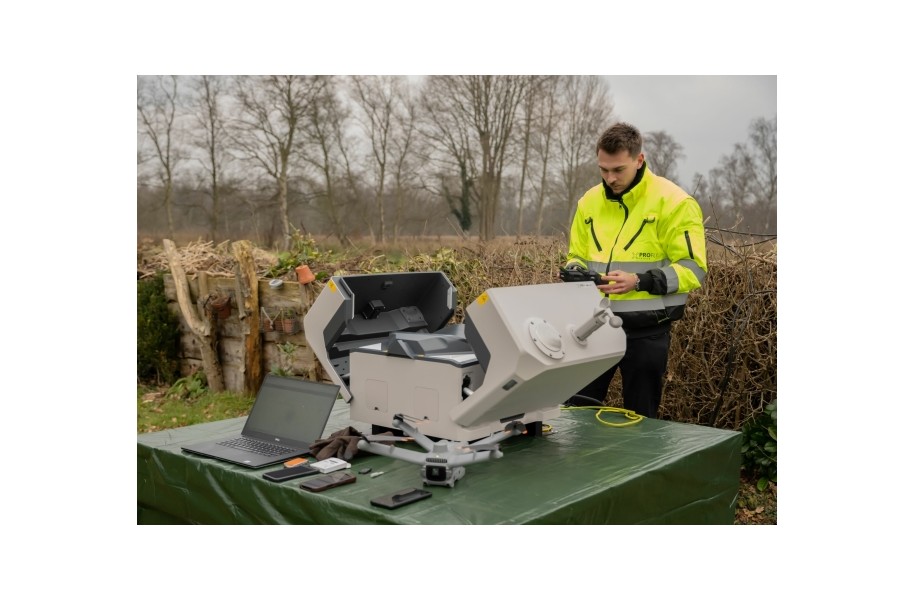
Case Study: Bohlen & Doyen – From A2 to DJI Dock 2 over >25 km
In this article, you will learn:
1. Client profile & initial situation: A2 (06/2022), inspection/surveying in the energy sector, DJI-certified training.
2. Demand → Solution: >25 km section, five-figure savings/year, decision for DJI Dock 2 + Mavic 3D, 5 Docks (Dock-Hopping or independent).
3. Implementation in 3 phases (4 weeks + 1 week + 8 weeks) – training, system, operation.
4. Authorization & SORA: M1 mitigation, FTS, BVLOS detection/avoidance, Geo Zone authorizations, OM, Stuttgart authority.
5. Infrastructure & Operation: Location/RTK, power/internet, foundation/security, FlightHub connection, tests, alternative landing site; self-operation reduces follow-up costs by up to 50%.
Client Profile & History
Collaboration since 2022: Request for A2 training (Open Category) at the Pro Fly Center, use of UAS for construction projects (especially energy). Equipment + software + training: DJI-certified inspection & surveying training combined theory and practice. Bohlen & Doyen Bau GmbH has since seamlessly integrated UAS to increase efficiency and precision. For operations beyond OPEN, STS-01/STS-02 training (including for Matrice 350 RTK) and the path to Dock technology followed.

Demand → Solution
The client planned automated measurements in the construction of gas networks over >25 km. Decision: DJI Dock 2 as the best fit (efficiency, cost reduction, remote monitoring), 5 Docking Stations with Mavic 3D, optionally Dock-Hopping (station-to-station) or as independent nodes. Personnel expenditure is reduced, pilots monitor flights remotely; annual savings in the five-figure range.
Implementation – 3 Phases
| Phase | Duration | Key Contents |
|---|---|---|
| Analysis & Preparation | 4 weeks | Flight geography, contingency volume, Ground Risk Buffer; operation in populated environment; M1 mitigation + FTS; Geo Zone authorizations (residential/protected areas); BVLOS tactics (detection/avoidance); SORA, OM, application. |
| Implementation | 1 week | 3-day on-site training (BVLOS, OM compliance, checklists/protocols, safety/emergency, project planning, redundancy/failsafe); setup of drone management; complete system configuration. |
| Monitoring | 8 weeks | Monitoring of flights, error correction & documentation, process/flight optimization, workshops incl. SORA; Result: high degree of autonomy, up to 50% lower costs for comparable projects. |
Authorization & Documents
After completing the risk assessment, we prepared the documents for the aviation authority; the Operations Manual (OM) is the central document (organization, risk management, execution). The Office in Stuttgart was responsible; the efficient exchange enabled authorization by the planned date – the first flight could start.

System Setup – Steps On-Site
1) Location selection (clear sky for stable satellite/RTK corrections).
2) Infrastructure: Power supply & Internet at the Dock location.
3) Foundation & Anti-theft protection.
4) Commissioning: Connection to FlightHub, necessary updates.
5) First test runs (without warnings, system check).
6) Setup of an alternative landing site (fallback in case of weather/problems).

Training – Content in Brief
Certifications & technology for BVLOS, application of the specific OM (checklists, protocols), safety drills/emergency plans, project planning with DJI technology, redundancy & failsafe, personnel management, and operation of DJI Dock, drone, and associated software. Duration: 3 days on-site.

Post-Implementation Support
We provide a complete solution including support after implementation – for questions, additional training, or hardware needs – so that operation and compliance remain stable long-term.
Conclusion
The setup of DJI Dock 2 and Mavic 3D over >25 km fulfills the requirements of Bohlen & Doyen: automated operations, remote monitoring, clear authorization basis (SORA/OM), and noticeable cost reduction.

Contact: We accompany analysis, authorization (SORA/OM), setup, and operation – up to the independent, audit-proof operation of your Dock fleet.
Are you interested in this topic? Check it out!