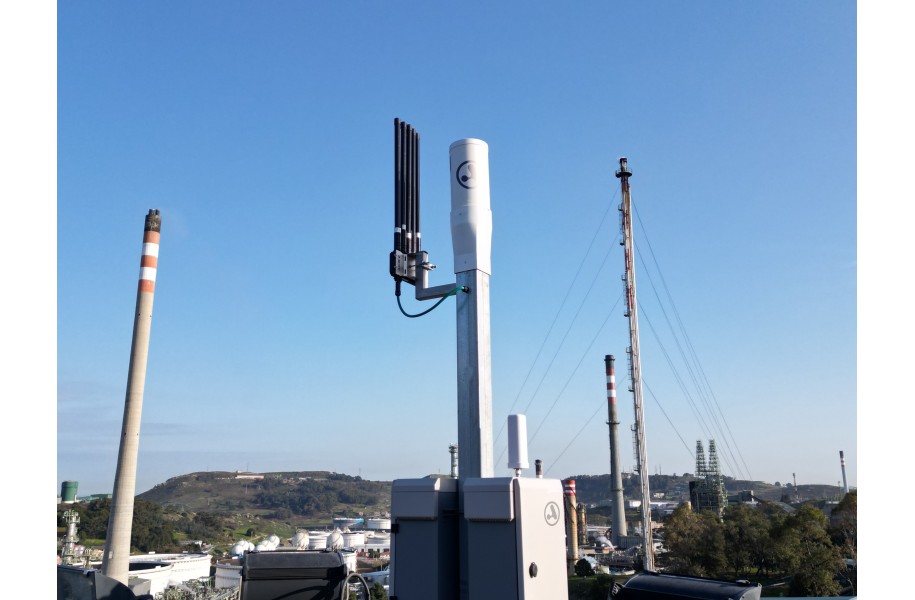


Why decision-makers need to pay attention
Many sensitive sites are protected on the ground. The airspace remains open.
Drones are described as dual-use technologies. The same systems that support inspection, surveying and documentation can also be used for unauthorised recordings, espionage or the surveillance of sensitive processes.
The risk affects a wide range of sensitive sites. These include critical infrastructure, industrial facilities, production plants, data centres, logistics sites, airports, club premises, stadiums and major events.
Sites affected include critical infrastructure, industrial facilities, data centres, logistics sites, club premises, stadiums and events.
Four real-world risk areas
What an unauthorised drone flight can mean
Intent cannot be determined from the outside. This is precisely why assessment should not begin only after damage has already occurred.
01 RECONNAISSANCE AND ESPIONAGE
Operations become visible from a new perspective
Cameras can capture production areas, prototypes, equipment locations and weaknesses in physical security. Repeated flights can enable systematic mapping of the site.
02 OPERATIONAL DISRUPTION
Uncertainty can bring operations to a halt
A flight close to sensitive machinery, logistics areas or crowds can trigger safety measures and interruptions. Without a situational overview, an appropriate response is difficult.
03 TRANSPORT AND MANIPULATION
Fences do not protect against payloads from the air
Drones can transport objects or additional technology directly into a target area. For processing, storage and open facilities, this creates a means of access that conventional perimeter security does not cover.
04 IT AND COMMUNICATIONS
Physical proximity can create digital risks
Near data centres, radio sites or internal IT networks, drones can be used to carry additional technology. Dilectro identifies data collection, reconnaissance and disruption as relevant scenarios.
Important: These scenarios do not mean that every drone is being flown with hostile intent. They show which questions decision-makers cannot answer without technical detection.
01 RECONNAISSANCE
Production areas, prototypes and vulnerabilities can be filmed or mapped.
02 OPERATIONS
Unidentified flights can trigger safety measures and operational interruptions.
03 TRANSPORT
Drones can carry objects or additional technology across conventional barriers.
04 IT AND COMMUNICATIONS
Near sensitive IT infrastructure, physical proximity can create additional digital risks.
Not every drone is being flown with hostile intent. Without data, however, that intent remains unknown.
Drone detected. What happens next?
Do not guess. Document and assess.
A security process needs the time, position, direction of flight, duration and affected areas. Repeated flights only become recognisable as a pattern when a traceable history is available.
Unauthorised interference is not a standard response for private operators. Detection first provides the information needed for internal measures and cooperation with the competent authorities.
01 Record the sighting: Document the time, location, route and affected areas.
02 Activate the reporting process: Involve those responsible for security in accordance with the defined procedure.
03 Assess the risk: Distinguish authorised internal flights from unknown operations.
04 Examine patterns: Analyse recurring times, routes and directions of approach.
Industrial facilities are subject to specific protection in Germany.
Under Section 21h of the German Air Traffic Regulations (LuftVO), operating drones over industrial facilities or within a lateral distance of 100 metres is generally permitted in the “open” and “specific” categories only with the express consent of the competent body or the operator. Whether this provision applies to a particular site must be assessed on a case-by-case basis.
01 Record the time, position and direction of flight.
02 Activate the internal reporting process.
03 Distinguish internal flights from unknown ones.
04 Examine recurring patterns.
Legal position: Under Section 21h of the German Air Traffic Regulations, flights over industrial facilities or within a distance of 100 metres generally require the express consent of the competent body or the operator. The provision’s application to a particular site must be assessed on a case-by-case basis.
Detection before response
A modern counter-drone system does not begin with interference. It begins with information.
The following describes three consecutive phases: detection, identification and an appropriate response. Only after a flight has been detected and assessed can decision-makers take proportionate action.
PHASE 01
Detection
A supported drone signal is detected within the monitored area.
PHASE 02
Identification
Available data on the model, position, direction of flight and controller are assessed.
PHASE 03
Response
Internal measures and the involvement of competent authorities are based on a documented situational overview.
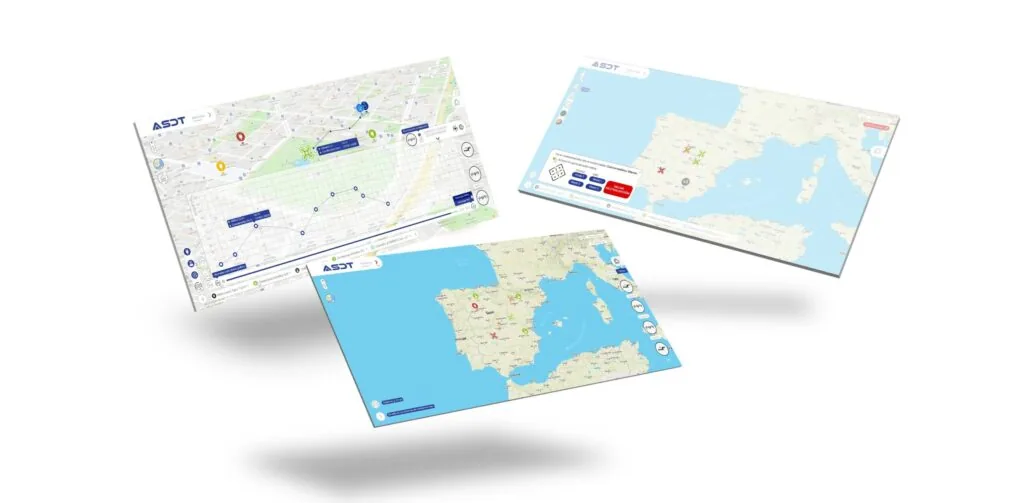
Modern C-UAS concepts follow three phases: detect, assess and respond appropriately.
01 DETECTION: Detect a supported signal.
02 IDENTIFICATION: Assess available flight parameters.
03 RESPONSE: Act on the basis of the situational overview.
ASDT SENDES for sensitive sites
Stationary for permanent sites. Mobile for changing deployments.
The right variant depends on the site, radio environment, area to be monitored, deployment duration and existing security process. ProFlyCenter assesses these factors before preparing a quotation.
Your direct contact
Do not wait for a second overflight.
Carsten Weber will assess with you whether SENDES is suitable for your site and, if so, in which configuration.
ASDT SENDES for sensitive sites
Stationary or mobile
The right variant depends on the site, area to be monitored, radio environment and deployment duration.
Discover ASDT SENDES View stationary system View mobile systemCW
Your contact
Carsten Weber
Do not wait for a second overflight. We assess your site, risk and suitable configuration.
Book a free initial consultationView sources
Are you interested in this topic? Check it out!