In this article, you will learn:
1. How drone inspections make damage visible early (leaks, drainage, maintenance damage).
2. Why the service is worthwhile for your customers (warranty, weather protection, PV suitability, prevention).
3. What advantages the method offers (accuracy, time, safety, cost).
4. Which legal bases and licenses are necessary (A1/A3, A2; possibly "specific" category).
5. Which technology is suitable (robust Enterprise drones, autonomous flight paths).
6. Which software you use for maps/models (e.g., DJI Terra).
7. How regular inspections prevent consequential damage and are documented.
Detect & Prevent Damage – with Routine and Overview
Recurring, thorough roof inspections by drone reduce effort and provide a comprehensive, verifiable analysis – without ladders, without risk. Typical findings: Cracks/leaks, clogged drains/gutters, maintenance damage after work on the roof, as well as PV suitability (orientation, area, condition).

Why You Should Offer Drone Roof Inspections
- Warranty Protection: Many warranties require periodic inspections.
- Weather Protection: Weather damage progresses unnoticed – detect early, fix cheaply.
- Leak Assessment: Quickly locate and document leaks.
- Drainage: Detect leaves/dirt, prevent standing water.
- Maintenance Damage: Timely find defects that occurred after work.
- PV Pre-Check: Status survey on inclination, orientation, usable area.
- Prevention: Regular checks prevent costly consequential damage.

Advantages of Drone Inspection
- Accuracy: Scalable image data sets ensure consistent quality.
- Time: 2D/3D results in a short time – more projects per day.
- Safety: Capture danger zones from the air instead of on a ladder/roof.
- Cost: Less personnel commitment, higher utilization, quick amortization.

Prerequisites – Legal & Technical
- Legal: A1/A3 (Basic), A2 for flights closer to people/areas; for large/heavy UAS possibly "specific" category.
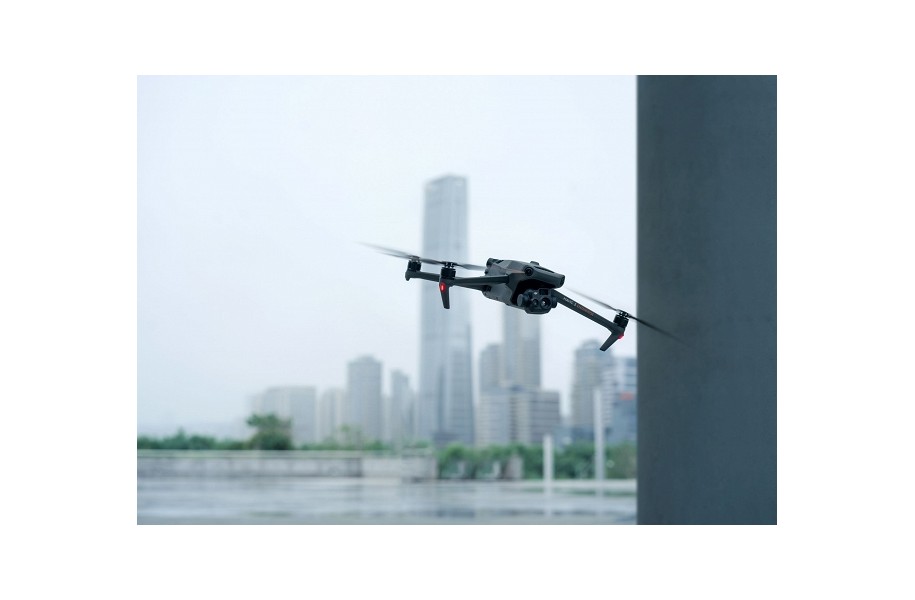
- Drone Choice: Enterprise models are more robust, designed for continuous operation in terms of maintenance and software.
- Autonomy: Pre-planned flight paths ensure complete, reproducible coverage.
- Software: Use DJI Terra to create highly accurate 2D maps/3D models (mission planning, area mapping, among others).
Further Education & Licenses
Inspection training (with DJI certificate): HERE
License training: A2 (Open Category) · STS (Specific Category)
Product training & workshops: Overview
Conclusion
Drones bring speed, safety, and transparency to roof inspection. With suitable licenses, a robust Enterprise platform, and clean documentation, every inspection becomes a reliable basis for decision-making – and costly surprises are avoided.
Are you interested in this topic? Check it out!